Study Japanese in Japan: Accredited Courses for All Levels

Looking to study Japanese in Japan and immerse yourself in the language, culture, and daily life of one of the world’s most unique countries? 

Japanese is a language deeply shaped by culture, context, and tradition. Studying Japanese in Japan allows learners to experience the social values that underpin communication, such as respect, attentiveness, discipline, and precision, within a society where language is carefully observed and thoughtfully used.

Japan offers an environment that supports steady, meaningful progress. IALC-accredited schools provide structured programs designed to help learners build strong foundations over time, combining academic discipline with cultural immersion. For students seeking depth rather than speed, Japan offers a learning experience that is both demanding and deeply rewarding.

Explore language courses in Tokyo, Kyoto, Fukuoka, Nagoya, and Okinawa, and discover how studying Japanese in Japan can open doors linguistically, professionally, and culturally.

Why Learn Japanese in Japan?

Language in Japan is inseparable from culture. Understanding when to speak, how to listen, and how meaning is conveyed often matters as much as vocabulary or grammar. Studying in Japan allows learners to absorb these subtleties naturally, through daily observation and guided practice.

Japan is especially well-suited to learners who:

  • Value structure, consistency, and careful progression
  • Are motivated by cultural understanding as well as language skills
  • Seek long-term fluency rather than immediate results
  • Appreciate learning environments built on focus and respect

IALC-accredited schools reflect these principles through well-paced curricula, experienced teachers, and strong student support. The emphasis is on developing competence and confidence gradually, leading to lasting linguistic and personal growth.

IALC-Accredited Japanese Language Schools in Japan

IALC accredits a network of independent schools renowned for their academic excellence and exceptional student care. Below are the trusted language schools available in Japan:


Genki Japanese and Culture School Fukuoka

Genki Japanese and Culture School Fukuoka

Fukuoka City, Japan

GenkiJACS is one of the first Japanese schools in Japan to teach communicative Japanese for everyday life, rather than academic Japanese.

  • Adults 18+/Max Class size 8
  • Juniors 14+/Max Class size 8
  • Year-round school with a Junior camp open from 30th June
  • Japanese
View Profile
Genki Japanese and Culture School Kyoto

Genki Japanese and Culture School Kyoto

Kyoto, Japan

GenkiJACS is one of the first Japanese schools in Japan to teach communicative Japanese for everyday life, rather than academic Japanese.

  • Adults 18+/Max Class size 8
  • Juniors 14+/Max Class size 8
  • Year-round school with a Junior camp open from July to mid-August
  • Japanese
View Profile
Genki Japanese and Culture School Nagoya

Genki Japanese and Culture School Nagoya

Nagoya, Japan

GenkiJACS is one of the first Japanese schools in Japan to teach communicative Japanese for everyday life, rather than academic Japanese.

  • Adults 18+/Max Class size 8
  • Year-round
  • Japanese
View Profile
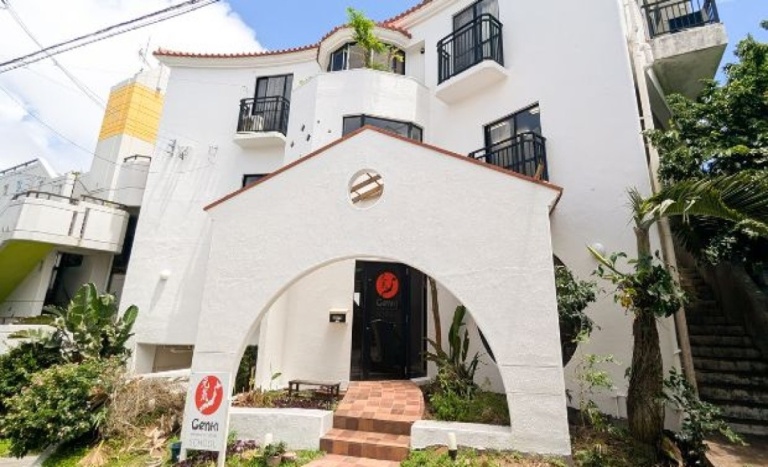
Genki Japanese and Culture School Okinawa

Genki Japanese and Culture School Okinawa

Naha, Japan

Genki Japanese School is a study abroad school for foreigners who want to learn Japanese in Japan.

  • Adults 18+/Max Class size 8
  • Juniors 13+/Max Class size 8
  • Year-round
  • Japanese
View Profile
Genki Japanese and Culture School Tokyo

Genki Japanese and Culture School Tokyo

Tokyo, Japan

GenkiJACS is one of the first Japanese schools in Japan to teach communicative Japanese for everyday life, rather than academic Japanese.

  • Adults 18+/Max Class size 8
  • Year-round
  • Japanese
View Profile
KAI Japanese Language School

KAI Japanese Language School

Tokyo, Japan

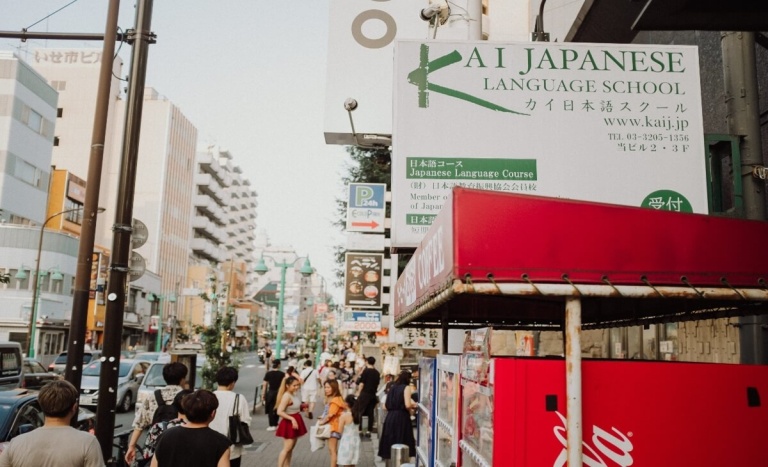
Founded in 1987, KAI Japanese Language School is a highly reputable and immersive Japanese language school conveniently located in Tokyo, Japan.

  • Adults 18+/Max Class size 16
  • Juniors 13+/Max Class size 16
  • Year-round school with a Junior Camp in July and August
  • Japanese
View Profile
LTL Language School Tokyo

LTL Language School Tokyo

Tokyo, Japan

LTL Language School Tokyo is located in the heart of Japan’s dynamic capital.

  • Adults 18+/Max Class size 8
  • Juniors 7+/Max Class size 10
  • Year-round
  • Japanese
View Profile

Studying in Japan Without Knowing Japanese

Can I study in Japan without knowing Japanese? Yes. Many students begin their studies in Japan with no prior knowledge of the language. IALC-accredited schools are well-equipped to support absolute beginners, offering structured courses designed to build skills from the ground up. From day one, students gain confidence using Japanese in real-life situations, both inside and outside the classroom.

Every IALC-accredited school in Japan meets the same high standards for teaching quality, student care, and ethical operation. For both students and agents, the IALC quality mark represents reliability, professionalism, and a commitment to educational excellence.

As independent schools, IALC members combine academic rigour with the personal care and professionalism that define high-quality language education.

FAQs About Studying Japanese in Japan

Are there Japanese courses for adults?

Yes. IALC-accredited Japanese language schools in Japan offer year-round Japanese courses open to adults of all ages, typically from 16+ or 18+, with no upper age limit.

Classes are usually small, often with a maximum of eight students, allowing for personalised attention, active participation, and steady progress in speaking and listening skills.

Some schools also offer teen programmes, particularly during the summer months.

Can I study Japanese in Japan as a complete beginner?

Yes. Many Japanese language schools in Japan offer complete beginner courses with regular start dates, often beginning on the first Monday of each month.

Before starting, students are typically expected to be able to read hiragana, the basic Japanese phonetic script. Familiarity with katakana is also recommended.

Because Japanese classroom teaching places strong emphasis on communication and listening skills, joining higher-level classes through grammar self-study alone is generally not advisable.

Is homestay immersion suitable for complete beginners?

Homestay immersion can be an excellent experience for beginners, but students are often advised to take introductory online lessons before travelling.

Having a basic foundation helps learners benefit more fully from a fully immersive environment and makes everyday communication easier from the start.

What are hiragana, katakana, and kanji?

Japanese uses three writing systems, which are combined in everyday texts.

Hiragana (ひらがな)
The main phonetic alphabet used for grammar and native Japanese words. It contains 46 basic characters and is the first script beginners learn.

Katakana (カタカナ)
A second phonetic script representing the same sounds as hiragana. It is mainly used for foreign words, brand names, and loanwords.

Kanji (漢字)
Characters of Chinese origin that represent meaning as well as sound. Thousands exist, and approximately 2,000 are needed for full literacy.

Understanding how these three writing systems work together is a central part of learning Japanese.

Can I study Japanese one-to-one in Japan?

Yes. Students seeking a highly personalised learning experience can choose one-to-one Japanese immersion programmes with providers such as Intuition Languages.

These programmes combine private Japanese lessons with full cultural immersion, as students live and study in their teacher’s home. Course length and intensity can be tailored to individual goals.

Are there specialist Japanese courses in Japan?

Yes. Learners with professional or academic objectives may choose specialised Japanese language courses through customised immersion programmes.

These may include:

  • JLPT exam preparation
  • Business Japanese
  • Academic Japanese
  • Medical Japanese
  • Japanese for legal professionals

Such programmes focus on intensive, targeted progress aligned with specific goals.

Can I learn Japanese for travel and everyday communication in Japan?

Yes. Many students choose Japanese for Travel and Pleasure programmes, which focus on practical communication for real-life situations.

These courses emphasise conversational confidence, cultural understanding, and everyday interaction.

With one-to-one immersion in the teacher’s home, students practise Japanese throughout daily life, whether in large cities such as Tokyo or Osaka or in quieter regional environments.

Does the learning experience differ between Japanese cities?

While academic standards remain consistent across accredited schools, the cultural environment varies significantly between cities.

Tokyo: A contemporary, fast-paced metropolis influenced by technology, design, and global culture.

Kyoto: Famous for temples, classical arts, and deep cultural heritage.

Nagoya: A dynamic city combining modern industry with historic samurai traditions.

Okinawa (Naha): A subtropical island with distinctive Ryukyuan cultural influences.

Fukuoka: A lively regional centre blending modern life with strong historical connections to China and Korea.

Students can therefore choose a destination that matches their interests while benefiting from the same academic standards.

How long should I study Japanese in Japan?

The ideal course length depends on your goals, starting level, and visa situation.

Beginners are typically advised to study for at least four weeks to see meaningful progress.

Students planning to enter a Japanese university often study for around one year to reach the required language level.

Short-term students may combine several course modules depending on their availability.

IALC-accredited schools can recommend an appropriate duration based on individual learning objectives.

Can minors study Japanese in Japan year-round?

Yes. Some IALC-accredited schools accept minors outside the summer period, particularly in Kyoto, Naha (Okinawa), and Nagoya.

Dedicated summer camp programmes are also available in Fukuoka in July.

Outside the summer season, minors may join regular classes with adult students. Students under 18 are typically required to stay in homestay accommodation to ensure appropriate supervision and support.

What are the visa requirements for long-term study in Japan?

Visa requirements depend on nationality and educational background.

For long-term study under a student visa:

  • Applicants with only a high school diploma may need to demonstrate prior Japanese study (approximately 150 hours) or pass a basic level of the JLPT.
  • Applicants with a university degree may be eligible to start long-term programmes as beginners, depending on immigration regulations.
  • For a one-year student visa, students typically need to show financial resources of approximately 2,000,000 yen, either personally or through a guarantor.

Students from visa-waiver countries may enter Japan for 90 days, often extendable once for a total stay of up to 180 days.

Schools provide guidance and supporting documentation where required.

How much does it cost to study Japanese language programs in Tokyo or Kyoto?

Costs vary depending on school, location, and program length. Generally, cities like Tokyo may have higher living expenses. Contact schools directly for tuition and accommodation details.

Are there short-term Japanese courses available in Japan?

Yes. Many accredited Japanese language schools in Japan offer short-term courses ranging from 1–2 weeks to several months. These programmes are ideal for students who wish to improve their language skills, experience Japanese culture, or combine study with travel.

Short-term courses are available at all levels, including complete beginners, and typically include structured lessons, small class sizes, and cultural activities. They do not usually require a student visa if the stay is under 90 days (depending on nationality).

Longer-term study options are also available for students seeking academic progression or visa sponsorship.

Begin Your Japanese Language Journey in Japan

For learners seeking cultural depth, disciplined study, and enduring fluency, Japan offers one of the most meaningful environments for language learning.

With IALC-accredited schools across the country, students and agents can rely on a consistent standard of quality while supporting a journey defined by focus, understanding, and long-term achievement.

Explore accredited language schools across Japan and take the next step toward Japanese fluency.

View IALC-Accredited Schools in Japan